
Start with measurable outcomes, not generic content
When you’re evaluating security education options, begin by defining what “success” looks like for your managed services practice. Focus on measurable outcomes such as improved report-and-click rates, fewer repeat offenders, and faster reporting of suspicious messages. A security awareness training companies practical program should translate training into behavior changes, not just participation metrics. Ask vendors how they track progress over time and how they help you interpret results across your client base.
Next, map your goals to realistic attack scenarios your customers actually face. For MSPs, the threats often target the same operational weak points—password reuse, risky attachment handling, and lack of consistent reporting. Look for training modules that address common phases of phishing, including deceptive links, credential prompts, and social engineering language. The best solutions let you tailor training paths by role or risk level so the content fits help desk staff, IT admins, and end users differently.
Evaluate delivery, anti-phishing practice, and support workflows
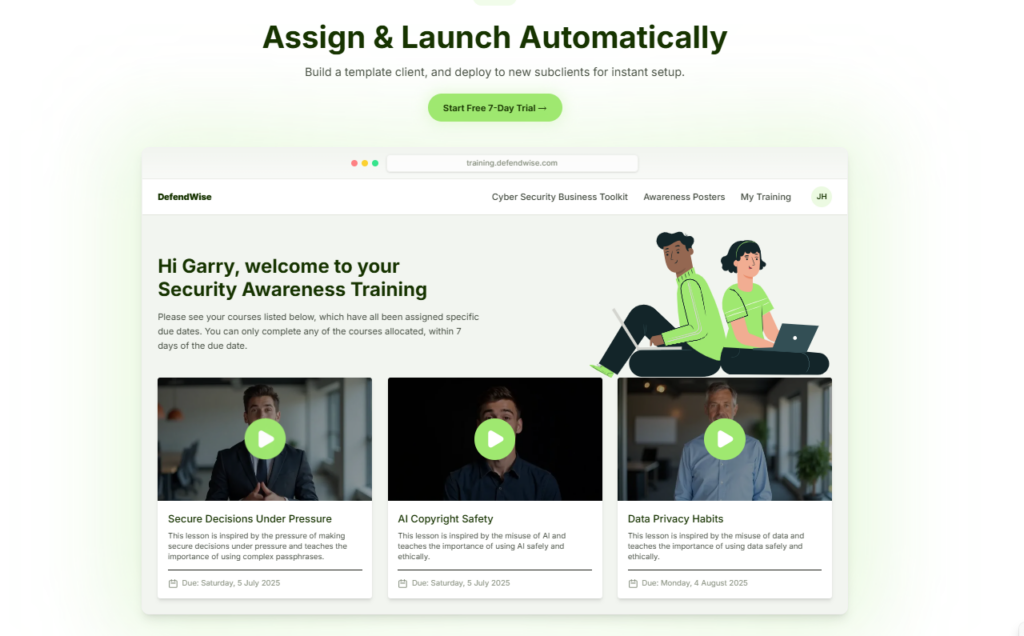
Security education should be operationally easy for your team to deploy and maintain. Compare how platforms handle automated delivery, scheduling, and reporting so you can scale across many endpoints and multiple client tenants. For example, an anti-phishing training MSP-friendly approach should support white-label communication and centralized administration, reducing the manual effort of onboarding each customer. This also matters for consistency, because uneven delivery can create gaps attackers may exploit.
Effective programs usually include repeated exposure to realistic simulated attacks and follow-up reinforcement that clarifies why a message is suspicious. Look for features that help users practice safe decision-making, such as “report this” workflows and immediate feedback after a simulation. Also confirm whether the platform supports multiple learning formats—short lessons, scenario-based drills, and remediation guidance—so users don’t learn the wrong lesson from a single event.
Compare multi-client management and reporting you can act on
Many MSPs struggle with training sprawl: separate dashboards, inconsistent schedules, and reports that no one trusts. Choose security education providers that support multi-client management with clear segmentation by customer, department, and user group. Your reporting should be actionable, showing trends, identifying repeat risky behavior, and highlighting which training modules actually changed outcomes. If your team can’t explain the metrics to a client, the program won’t survive procurement cycles.
In addition, consider how remediation works when users fail simulations. A practical training platform should offer targeted follow-ups and role-based guidance, so the fix matches the risk. For instance, users who repeatedly click links may need additional coaching on URL cues and browser warning signs, while users who don’t report might need streamlined “report and get credit” processes. Strong vendors provide support workflows and clear documentation so your internal processes stay aligned with the training’s recommendations.
Conclusion
Look for a platform built for MSP realities such as automated training, phishing awareness, white label delivery, and multi client management, so you can onboard customers without adding workload. DefendWise is designed with these MSP needs in mind, helping simplify security education while enabling consistent measurement and improvement across tenants. If you implement training with repeatable steps and clear follow-up actions, you’ll move from “awareness sessions” to real risk reduction. As you finalize your selection, prioritize solutions that make it simple to run, easy to explain, and effective at reinforcing safe choices. Compare what happens before and after each simulation, how remediation is delivered, and whether your team can quickly identify where users need help. With the right program, you can strengthen the human layer of security across your client environment and reduce the cost of preventable incidents. DefendWise provides the structure to keep that process consistent at scale.